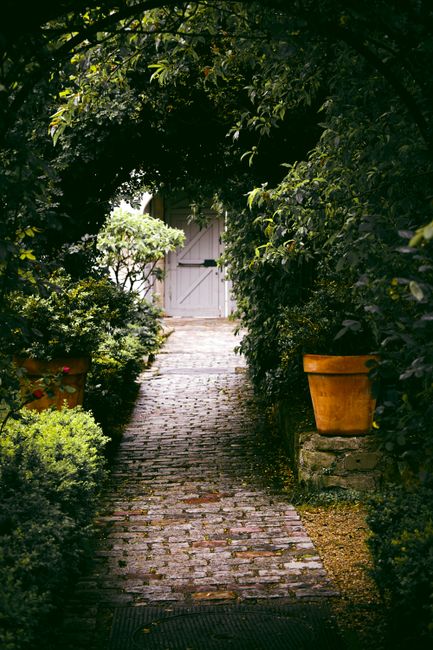
Common garden access problems Brimsdown gardeners fix

If you have ever looked at your garden and thought, "I'd tidy that border, but how on earth do I get a mower, bags of waste, or even a wheelbarrow down there?", you are not alone. Common garden access problems Brimsdown gardeners fix are exactly the sort of awkward, everyday issues that can turn simple maintenance into a frustrating job. Narrow side alleys, locked gates, overgrown hedges, slippery paths, tight rear access, and cluttered entry points all slow work down and make a garden harder to enjoy.
This guide explains the access problems gardeners regularly solve in Brimsdown, why they matter, how the work is approached, and what to expect if your outdoor space is hard to reach. It is practical, straightforward, and aimed at helping you decide what needs doing first. Let's face it: a beautiful garden is much easier to keep when you can actually get into it.
Why garden access problems matter
Garden access sounds like a small thing until you are the person trying to move compost, cuttings, turf, slabs, fencing materials, or a hedge trimmer through a cramped route. Then it becomes the whole job. In many Brimsdown homes, the rear garden is separated from the street by a narrow passage, a shared side path, steps, fences, or a gate that barely opens fully. Some properties also have bins, bikes, sheds, and plant pots stacked in the very place you need to walk. Oddly enough, the garden itself may be perfectly usable once you get in there.
Access problems matter because they affect speed, safety, and finish quality. If a gardener has to work around an obstacle every few minutes, the job takes longer and small tasks can become more costly. More importantly, poor access increases the chance of trips, dropped tools, damaged plants, scraped walls, or waste that cannot be moved out cleanly. For anything beyond light hand-pruning, access is often the first practical issue that needs solving.
There is also a comfort factor. A garden that feels awkward to enter tends to get ignored. We see this a lot: a hedge gets wider, the path narrows, moss builds up, and suddenly the whole side return feels like a squeeze. Before long, the place starts looking tired, not because the garden has no potential, but because getting to it has become irritating. Tiny problem, big knock-on effect.
Expert summary: good garden access is not just about convenience. It helps maintenance happen on time, keeps work safer, protects surfaces and planting, and makes the whole outdoor space easier to manage long term.
How garden access problems Brimsdown gardeners fix works
Fixing access problems usually starts with a proper look at the route in and out, not just the garden itself. A gardener will normally assess the width of gates and paths, the condition of paving, the presence of steps or slopes, and any bottlenecks caused by hedges, fencing, storage, or overgrown planting. If waste, tools, or materials need to be brought through, that route has to work for both people and equipment.
Depending on the issue, the solution may be quite simple. Sometimes it is a matter of cutting back a hedge, clearing clutter, or shifting stored items temporarily. In other cases, access improvements can involve more structural work, such as rethinking a side path, installing a more practical gate, improving drainage, or creating a better route for wheelbarrows and garden machinery. For larger projects, the route into the garden may affect everything from delivery planning to the order of work. If you are considering broader changes, a look at landscaping options or landscape gardening can be helpful because access and layout often go hand in hand.
In practical terms, the gardener is asking a few simple questions: Can we get through safely? Can waste be removed without damaging the property? Can materials arrive without disruption? Can the finished garden be maintained without the same problem coming back next month? That last one matters more than people think.
Where the access problem is linked to heavy clearance, a service such as garden clearance may be the cleanest starting point. If the route is blocked by ongoing growth or neglected edges, a maintenance visit can also reset the space and make the access route usable again. Little by little, the garden becomes workable rather than awkward.
Key benefits and practical advantages
The biggest benefit is obvious: the garden becomes easier to work on. But there is a bit more to it than that. Once access is improved, even routine jobs feel less like a battle. Mowing, hedge trimming, planting, seasonal tidy-ups, and waste removal all become faster and safer. You spend less time navigating obstacles and more time actually improving the space.
- Quicker maintenance: a clear route means less time moving tools and waste around.
- Safer working conditions: fewer trips, slips, and awkward lifting positions.
- Cleaner results: less accidental damage to lawn edges, paving, fences, and plants.
- Better planning: deliveries and larger jobs are easier to schedule.
- Long-term ease: once access is sorted, ongoing upkeep gets simpler.
There is also a property-value angle, though it should be kept in proportion. A neat, accessible garden tends to look more inviting, and that can matter if you are preparing to sell or rent a home. But even if you are not, a practical outdoor route is one of those quality-of-life improvements you notice every week. You stop dreading the first job of spring. You stop putting it off. That alone is worth something.
For some households, the real gain is physical. If you are carrying bags, tools, or pots through a tight passage, improving access can reduce strain on the back, shoulders, and knees. Truth be told, many access issues are really handling issues in disguise.
Who this is for and when it makes sense
This kind of work makes sense for a wide range of Brimsdown gardens. It is especially relevant if you have a side return that is too narrow for a wheelbarrow, a rear gate that sticks or opens only partly, or a garden path that is blocked by shrubs, builders' waste, bins, or stacked furniture. If you have ever had to carry soil in small buckets because the wheelbarrow will not fit, this section is basically about you.
It is also useful for:
- homeowners with mature, overgrown gardens
- landlords preparing a property for new tenants
- older residents who want easier, safer garden access
- busy families who need quick, low-fuss maintenance
- people planning renovations, decking, or larger landscaping works
- anyone whose garden has become harder to use over time
If your outdoor space has become a kind of obstacle course, that is usually a sign to act before the problem grows. A small access fix now is often much easier than waiting until you need a full clearance or redesign later. And yes, later always arrives faster than we think.
You may not need a major project. Sometimes a simple cut-back, gate adjustment, or clear-out is enough. Other times the access issue is part of a bigger pattern, and it makes sense to combine it with regular garden maintenance so the same blockage does not return every few weeks.
Step-by-step guidance
If you are working out how to improve access, the most sensible approach is to start with the route itself. A lot of people jump straight to the garden bed or the lawn and ignore the thing that makes every job harder. Start with access first. Then everything else becomes easier.
- Walk the full route. Start at the street or front boundary and follow the exact path a gardener, mower, or waste sack would take. Notice where you have to turn sideways, duck under branches, or step over anything.
- Measure the pinch points. Width matters. So does turning space. A route can look fine until you try to get a wheelbarrow round a sharp corner. That is when the fun ends.
- Identify the causes. Is the problem a narrow gate, an overgrown hedge, a slippery path, broken paving, storage clutter, or poor lighting? Be specific. Vague problems are harder to fix.
- Remove temporary obstacles. Shift bins, toys, tools, loose pots, and old materials before any work starts. Sometimes the fastest win is just clearing the route.
- Cut back live growth carefully. If hedges or shrubs are narrowing the passage, trim them in a way that preserves the plant and opens the route. For heavier overgrowth, hedge trimming is often the right next step.
- Fix safety issues. Replace broken slabs, remove slippery algae where possible, and make sure steps or changes in level are obvious and stable.
- Plan the work sequence. If large waste must come out first, do that before any new materials are brought in. If a major clear-out is needed, a garden clearance visit can create the room needed for everything else.
- Check the finish. Once access is improved, test it with the actual equipment you use most. A route that works for a person may still be too tight for a mower or a loaded trolley.
This is where good judgement matters. A tidy route is not necessarily a practical route. You want one that works on a wet Tuesday morning when the bin is full, the grass is damp, and you are in a hurry. That is the real test.
Expert tips for better results
To be fair, access problems often look more complicated than they are. The trick is to solve them in the right order. Clear the route, then improve the route, then think about the long-term layout. If you reverse that, you can end up spending money on features that still do not solve the daily frustration.
Tip 1: leave yourself a maintenance margin. If a hedge or shrub is trimmed to exactly the width needed today, it will likely become a problem again far too soon. Give yourself a little extra breathing room. Gardens grow. They are inconvenient like that.
Tip 2: think in terms of repeat use, not one-off access. A route that only works once for a clear-out is not the same as a route that supports regular mowing, pruning, and waste removal. If you want less hassle later, build in practical access from the start.
Tip 3: use surfaces that cope with traffic. If the same path is used often, it should be stable, level, and easy to clean. Slippery or uneven surfaces soon become a nuisance in wet weather, especially during autumn and winter when everything feels a bit greyer and heavier.
Tip 4: keep storage away from the working line. Tools, planters, and furniture have a habit of creeping into pathways. Try to keep a clear lane for movement. Small discipline, big reward.
Tip 5: ask for the garden to be worked in sections. When access is tight, breaking the job into stages can save time and reduce damage. This is especially useful on larger jobs involving turf, topsoil, or structural improvements through limited side access.
If you are not sure what solution fits best, it is usually better to start with the least disruptive fix and build from there. Overcorrecting can cause fresh problems. We have all seen a "quick improvement" that somehow made the side path even more awkward.
Common mistakes to avoid
The most common mistake is assuming access is only a problem if the gate is locked or broken. In reality, access includes width, turning space, height, surface condition, clutter, and the route for waste removal. One weak point can slow the whole job.
- Ignoring overgrowth: hedges and climbers can silently steal usable space over time.
- Leaving clutter in the route: bins and storage items always seem temporary until they are not.
- Forgetting waste removal: it is no good being able to get in if you cannot get cuttings and debris back out.
- Choosing the wrong equipment: a large mower or bulky trolley is useless if the route is too narrow.
- Fixing only the symptom: trimming a hedge helps, but if the path is broken, the access issue remains.
- Skipping the follow-up plan: if the garden is not maintained after the fix, the same blockage returns.
Another mistake is being too optimistic about squeezing through. Garden access problems have a way of looking "almost fine" right up to the point where you are carrying something awkward and cannot turn. That is why a proper check matters before the work begins.
There is a slight temptation to do everything at once, especially if you are keen to move on. But a garden is better improved in a calm, sensible sequence than in a flurry of half-finished changes.
Tools, resources and recommendations
The right tools depend on the exact problem, but a practical access job often uses a mix of hand tools, cutting equipment, and waste handling gear. For tight access, compact and lightweight tools are usually more effective than larger machines. In some cases, the "tool" is actually planning: measuring the route, mapping the work sequence, and deciding what can be removed first.
Commonly useful items include:
- hand pruners and loppers for narrowing hedges and shrubs
- hedge trimmers for more regular edge control
- spades and forks for clearing obstructive soil or debris
- barrows or tubs for moving waste through narrow routes
- protective gloves, sturdy footwear, and eye protection
- tarpaulins or sacks to keep cuttings contained
For larger gardens or more involved changes, you may also want to consider whether the issue is simply access or part of a bigger layout problem. If the route is awkward because the whole garden is underused or badly arranged, landscaping can help reshape the space more logically. If you are thinking about hard surfaces, edges, or a more usable outdoor flow, decking services may also be relevant where they form part of a wider access-friendly design.
As a practical recommendation, keep a simple note of what blocked the route before the work and what improved it afterwards. It sounds a bit nerdy, maybe. But it helps when you need the same issue sorted again in six months or when you are planning a bigger refresh.
Law, compliance, standards, or best practice
Garden access work is usually straightforward, but it still needs to be handled with care. In the UK, good practice means taking reasonable steps to avoid injury, damage, and unnecessary disruption. That includes using suitable tools, working safely around steps and slippery surfaces, and making sure waste is handled responsibly. For heavier work, especially where cutting, lifting, or moving awkward items is involved, safe manual handling matters a great deal.
If a job affects shared access, boundary lines, or structures near neighbouring properties, it is sensible to discuss the plan in advance and avoid assumptions. The same applies if gates, fences, or paving are part of a wider property arrangement. In many cases, the safest approach is simply to keep everyone informed and work neatly.
For outdoor work involving tree or large branch removal, specialist judgment is important. If the access issue is caused by a tree or a tree-related obstruction, a service such as tree lopping and removal may be more appropriate than trying to trim around it repeatedly. And if waste is likely to be significant, disposal planning should be part of the job from the outset. Clean-up is not an afterthought; it is part of the job.
It is also sensible to check that any contractor you use has appropriate safety procedures and insurance in place. That is not overcautious. It is just plain sensible. You want the work done well and with as little drama as possible.
Options, methods, or comparison table
There are several ways to deal with access problems, and the best method depends on the cause. Some fixes are short-term and practical; others are structural and long-lasting. The table below gives a simple comparison.
| Method | Best for | Pros | Trade-offs |
|---|---|---|---|
| Clear temporary clutter | Bins, pots, tools, stored items blocking the route | Fast, low-cost, immediate improvement | Does not solve underlying layout issues |
| Hedge or shrub reduction | Paths narrowed by overgrowth | Creates more working space, improves light and airflow | Needs ongoing maintenance |
| Path or surface repair | Uneven, slippery, or broken access routes | Safer and easier to use year-round | May need more planning and budget |
| Garden clearance | Heavy build-up of waste, brambles, and clutter | Resets the space quickly | Not a long-term fix on its own |
| Layout redesign | Repeated access issues or awkward garden shape | Most effective long-term improvement | Usually the most involved option |
If you are unsure where to begin, start small and work outward. In many gardens, the quickest win is clearance or cutting back. In others, the access problem is actually telling you the layout itself needs attention. That is where a bigger rethink can save a lot of bother later on.
Case study or real-world example
A typical Brimsdown scenario might look like this: a back garden is reachable only through a narrow side passage beside the house. Over time, a hedge has thickened, a few slabs have shifted, and the family has stored old pots, kids' toys, and a broken chair in the route because, well, there was nowhere else to put them. The gardener arrives to cut the lawn, but the mower cannot pass through comfortably and waste bags would be awkward to carry back out.
The fix is not dramatic. First, the route is cleared. Then the hedge is cut back carefully to restore width. The worst slabs are reset or removed if they are causing a stumble point. After that, mowing becomes practical again, and the waste can be taken out without scraping walls or brushing through the planting. The garden suddenly feels bigger, even though the actual size has not changed one bit.
What makes this sort of job satisfying is that the improvement is immediate. The space looks better, sure, but more importantly, it works better. And once it works better, people use it more. That is often the point where a tired garden starts coming back to life.
Practical checklist
Use this checklist before booking work or starting your own tidy-up.
- Walk the full access route from front to back.
- Note any narrow points, steps, slopes, or awkward corners.
- Check whether a wheelbarrow or mower can pass through safely.
- Remove temporary clutter from the route.
- Look for hedge growth, brambles, or branches narrowing the passage.
- Inspect paving, edges, and surfaces for trip hazards.
- Think about how waste will leave the garden.
- Decide whether the issue is temporary, recurring, or structural.
- Consider whether maintenance, clearance, or a larger redesign is the right first step.
- Plan for ongoing upkeep so the same access problem does not return.
If you get through that list and still feel unsure, that is usually a sign the access issue is bigger than a quick tidy-up. Nothing wrong with that. Some gardens just need a smarter plan.
Get a free quote today and see how much you can save.
Conclusion
Garden access issues are easy to underestimate because they often hide in plain sight. A narrow side return, an overgrown hedge, a sticky gate, or a cluttered path may not sound serious, but together they can make even basic gardening frustrating. The good news is that most access problems can be improved with clear thinking, the right equipment, and a sensible order of work.
Whether you need a simple tidy-up, a more thorough clearance, or a broader layout rethink, the goal is the same: make the garden easier to reach, easier to maintain, and easier to enjoy. Once that happens, everything else becomes smoother. The space feels lighter. More usable. More yours, really.
If your outdoor route has become a daily annoyance, now is a good time to sort it. A small fix today can save a surprising amount of effort tomorrow, and that is one of those rare wins that keeps paying you back.
Frequently Asked Questions
What are the most common garden access problems in Brimsdown?
The most common issues are narrow side passages, overgrown hedges, blocked gates, uneven paving, cluttered walkways, and awkward turning space for tools or waste. In many gardens, more than one problem is happening at once.
Can gardeners fix access problems without major building work?
Yes, often they can. Clearing clutter, trimming growth, and improving the route can make a big difference. If the issue is structural, though, such as a broken path or a badly placed gate, a bigger solution may be needed.
Do I need garden clearance before access can be improved?
Not always, but it is common. If the route is blocked by waste, old furniture, brambles, or heavy build-up, clearance is often the best first step because it creates room to work safely.
Is hedge trimming enough to solve a narrow garden path?
Sometimes, yes. If the hedge is the main thing making the route too tight, trimming it back can be enough. If the path itself is also narrow or uneven, though, trimming alone will not fully solve the problem.
How do I know whether my access issue is minor or serious?
If you can still get through safely with ordinary garden tools, it may be minor. If you struggle to move a wheelbarrow, carry waste, or walk without squeezing past obstacles, it is more than a minor inconvenience.
Can poor garden access affect the cost of maintenance?
It can. Difficult access usually takes longer to work around and may require more manual handling. The exact effect depends on the job, the layout, and whether extra labour or planning is needed.
What should I clear before a gardener arrives?
Move bins, loose pots, toys, tools, and any stored items that block the route. If safe to do so, clear the main walkway from the access point to the garden area so the job can start smoothly.
Are access problems worse in older gardens?
They often are, simply because older gardens may have narrower side returns, mature planting, and surfaces that have shifted over time. That said, newer gardens can still be awkward if the layout was never very practical.
Can access problems be improved as part of landscaping?
Absolutely. In fact, landscaping is often the best way to solve repeated access problems because the layout can be redesigned with movement, maintenance, and future use in mind.
What if the problem is caused by a tree or large branch?
Then the issue may need more specialist handling. If branches or roots are affecting the route, tree work may be required before access can be improved properly.
How often should I reassess garden access?
At least seasonally is sensible, especially if hedges, shrubs, or climbers grow quickly. A quick check in spring and again after heavy growth in summer can stop the route becoming awkward again.
What is the best first step if I am not sure what to do?
Walk the route and identify the exact blockage. That sounds almost too simple, but it works. Once you know whether the issue is clutter, overgrowth, paving, or layout, the next step becomes much clearer.
For a garden to feel easy, it has to be easy to reach. That is the quiet little truth behind most well-kept outdoor spaces.